|
Lot No.112
AUC50
Mughals
Auction Date: 04-01-2026
Silver
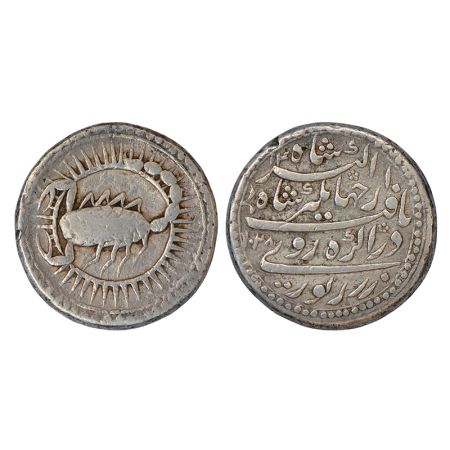
Jahangir (1605-1627 AD), silver 'Zodiacal' rupee, Agra mint, 'Scorpio' sign ( Aban month), AH 1028/RY 14, struck from the gold mohur dies; rupee unlisted in KM but similar to gold mohur KM 180.14, 11.18g. Obv: Zodiac sign of Scorpio the Scorpion - Constellation of Gazdum/Vrishchika, facing left, with hooked tail, against a sunburst. Rev: Farsi couplet Rooye Zar Zewar yaft dar Agrah/ az Jahangir Shah Akbar Shah ("the face of gold was given light in Agra, by king Jahangir (the son of) king Akbar") with AH date and RY.
A beautifully preserved coin exhibiting excellent eye appeal, Good very fine, Unique so far.
The first specimen to be offered at any auction - certain to attract the attention of many collectors.
Notably, no examples are recorded in Zeno or in CoinArchives.
One of the rarest of silver Zodiacal rupees, perhaps only beaten by Virgo, of which only one specimen is known. Issued during the first year of the inception of Zodiacal coinage, coins of Scorpio sign had a shorter issuing period as the Hijri year 1028 runs out in early November 1619. This rupee is die-identical to the mohur Zeno 161351.
A mention in the 'Tuzuq-i Jahangiri', the memoirs of emperor Jahangir for the 14th regnal year records that he had an idea that the Zodiacal sun sign representing every solar Ilahi month should be depicted on his coins, rather than just an inscribed mention of it. This innovation prompted the famous Zodiacal series of Jahangir's coinage, often considered the Zenith of Mughal Numismatics in terms of its artistic beauty and historicity, not to mention its lure to the connoisseur collectors of Mughal coins.
Zodiacal coins were struck as rupees and mohurs. While Agra predominates as a mint for known gold mohurs, rupees are most commonly known for Ahmadabad. Rupees of Agra, in comparison, are much rare - sometimes even more so than the mohurs.
View Lot
Estimated Price :
Rs. 15,00,000-20,00,000
Sold For :
Rs. 61,00,000
|