The world is changing fast and to keep up you need local knowledge with global context.
The world is changing fast and to keep up you need local knowledge with global context. Mini Size Ups
Now that loadshedding seems to be here to stay, we might as well incorporate it into our lives instead of sitting in the dark and cold waiting for it all to go away – and invest in the most cost-effective ways to help make our lives less miserable. Read below for some ways to stay connected to the Internet, at least. Article republished courtesy of MyBroadband. – Sandra Laurence
For as little as R595, South Africans can get a small uninterruptible power supply (UPS) to provide backup power to their wireless Internet connection during load-shedding.
Fortunately, you don’t need a large or expensive backup battery system to keep the average home Wi-Fi router powered, as these use very little electricity.
According to Energy Sage, Wi-Fi routers typically have a peak power output between 5W and 20W, depending on the model.
That is similar to power-efficient light bulbs and much less than the typical consumption of a TV, fridge, microwave, or other appliances.
For the more common two hours of load-shedding, a router would consume between 10Wh and 40Wh of power.
Energy Sage said that 10Wh would be a fair average hourly electricity consumption to assume for most modern Wi-Fi routers from major manufacturers.
Based on that figure, you would require no more than 40Wh of capacity to have your router stay on for the maximum four-hour outage you can get under stage 6 load-shedding.
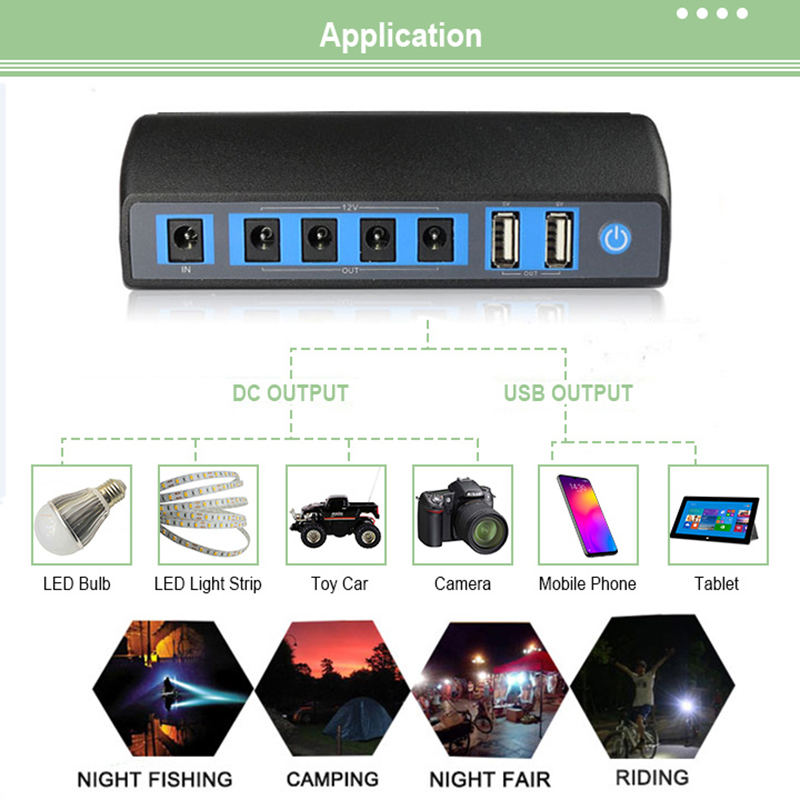
There are numerous mini UPSs on the market ranging in size from 18Wh to 105Wh.
These often come packed with lithium-ion batteries that can charge and discharge with high efficiency, making them ideal for providing backup power.
To determine whether a Mini UPS would benefit you, you must first consider the type of broadband package you have at your home or office.
If you use a mobile-based connection, you must confirm that your chosen network stays up during load-shedding.
If the cellular towers in your area don’t have sufficient backup batteries to stay online during load-shedding, then a UPS for your router will be of little use.
If you are on a fibre package, you should also check with your ISP to confirm whether your area will have Internet connectivity during load-shedding.
Most fibre network operators have sufficient backup capacity to support customers with continued connectivity during load-shedding.
You would then only have to ensure that the Optical Network Terminal (ONT) that connects your router to the fibre network, and the router that provides Wi-Fi to your house, have backup power.
Some ISPs in South Africa have started offering free Mini UPSs for the router and ONT with their packages.
Below are 10 of the most affordable small backup batteries you can buy to keep your router powered during load-shedding.
Mini DC UPS Backup Battery Power Bank — R595 (GeeWiz)
Mini DC UPS — R745 (GeeWiz)
Volkano Constant Series Mini UPS — R799 (Incredible Connection)
Eaton 3S Mini — R965 (First Shop)
Gizzu 8,800mAh Mini DC UPS — R999 (DigiCape)
Gizzu 8,800mAh Mini DC UPS with splitter cable — R1,099 (DigiCape)
WiBox UPS Mini Battery Power Back-up — R1,399 (Makro)
Vizia Wi-Fi UPS with splitter cable — R1,399 (Everyshop)
Vizia UPS for Wi-Fi Router with splitter cable — R1,499 (Incredible Connection)
Ellies Router Backup Unit — R1,599 (Everyshop)
Listen to the story of Cyril Ramaphosa's rise to presidential power, narrated by our very own Alec Hogg.

Ups Mini 18650 © 2024 BizNews, Inc. | The Rational Perspective Terms & ConditionsComments Policy